What are the Differences Between Digital Signature and Electronic Signature

Summary :
This article explains the difference between digital signature and electronic signature. You can also take a quick glance using the comparison table.
Table of Contents
Difference Between Digital Signature and Electronic Signature
This page thoroughly compares digital signatures and electronic signatures in different criteria.
You’ll find out their key differences, their different use cases, and a free online PDF signature tool to sign on PDFs with ease.
TL;DR
✅They both facilitate the signing of documents electronically.
✍️Digital signatures ensure higher levels of security and compliance and are used for high-value financial transactions, legal documents, and other sensitive agreements.
✍️Electronic signatures are commonly used for everyday signing with minimal risk of tampering. PDFgear offers a free online PDF signer to add signatures to PDFs easily.
Definitions Explained
Electronic Signature (E-Signature)
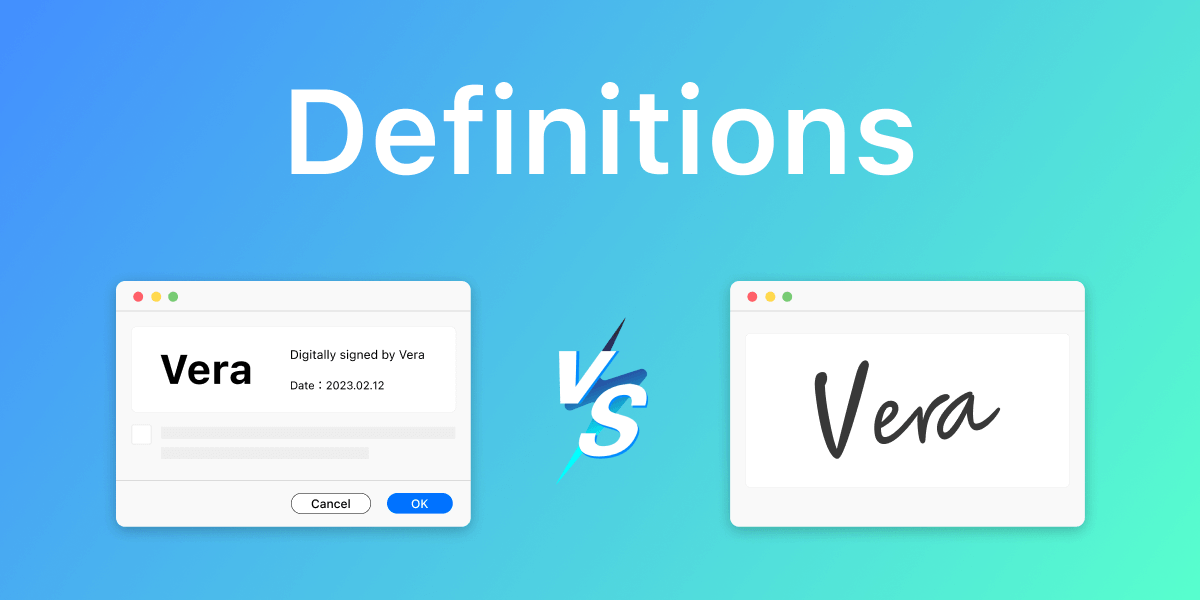
An electronic signature is a broad term that refers to any electronic process that indicates acceptance of an agreement or a document.
This can include a scanned image of a handwritten signature, a typed name, or even a checkbox on a form.
Digital Signature
A digital signature is a specific type of electronic signature that uses cryptographic techniques to provide additional security and verification.
It involves creating a unique digital fingerprint of the document, which ensures the integrity and authenticity of the signed document.
Definitions Explained
Technology and Infrastructure
Electronic Signatures
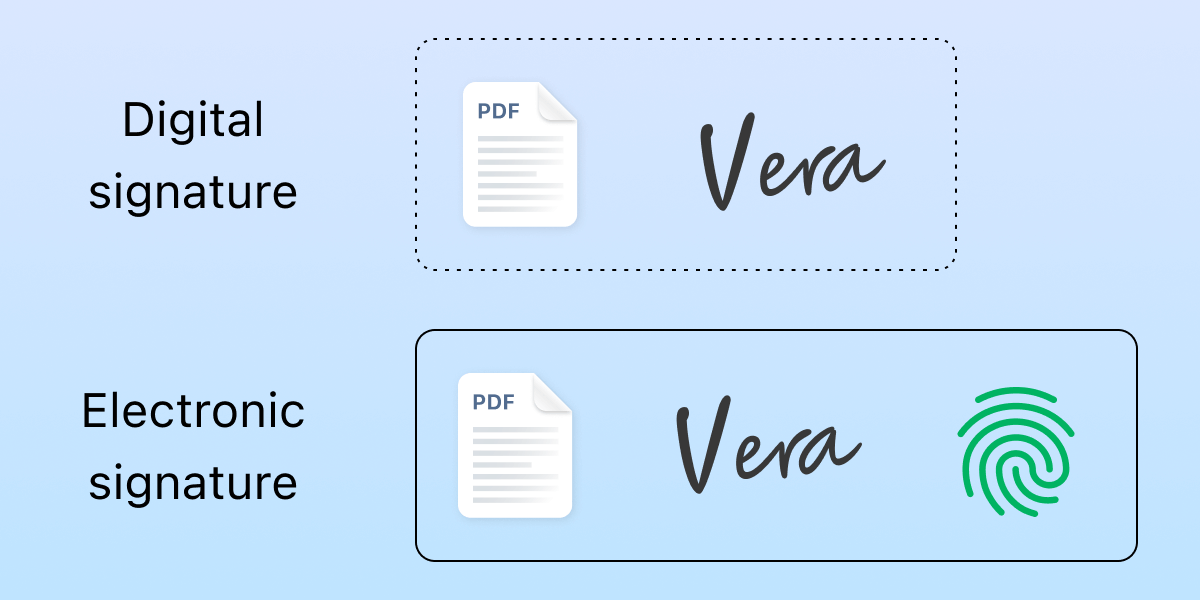
These can be created using basic tools such as a mouse, touchpad, or even a typed name.
They do not require specialized software or hardware and are generally easier to implement.
Digital Signatures
These require specialized software and the use of Public Key Infrastructure (PKI) technology.
PKI involves the use of a pair of cryptographic keys (public and private) to create and verify the digital signature.
Technology and Infrastructure
Security and Authentication
Electronic Signatures
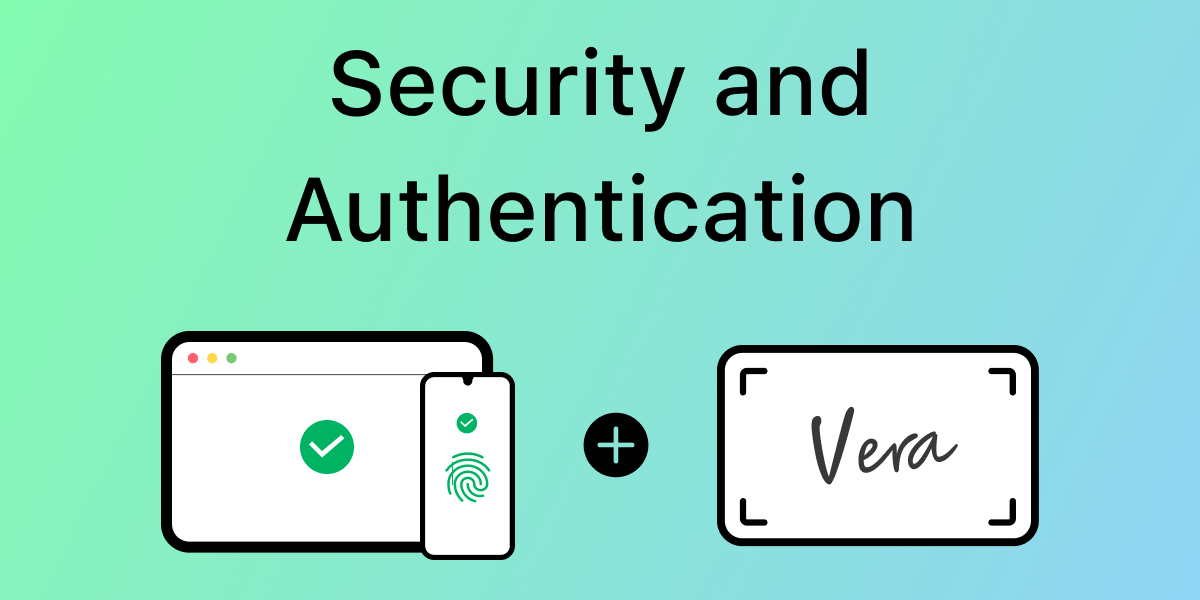
While convenient, electronic signatures do not inherently provide security features such as identity verification or document integrity.
They are suitable for less critical transactions where the risk of tampering is low.
Digital Signatures:
Digital signatures offer a higher level of security by ensuring the signer’s identity and the document’s integrity.
They can detect any changes made to the document after it has been signed, making them suitable for high-value transactions and sensitive information.
Security and Authentication
Legal Frameworks and Compliance
Electronic Signatures
The legal acceptance of electronic signatures varies by jurisdiction.
In the United States, the ESIGN Act provides a legal framework for electronic signatures, but their acceptance can vary depending on the type of document and industry.
Digital Signatures
Digital signatures often meet stricter legal and compliance requirements.
For example, in the European Union, the eIDAS regulation provides a legal framework for digital signatures, ensuring their acceptance across member states for high-value and regulated transactions.
Legal Frameworks and Compliance
The Comparison Table
| Aspect | Digital Signature | Electronic Signature |
| Definition | A cryptographic technique that uses a certificate to validate the signer’s identity and ensure document integrity. | Any electronic process that indicates acceptance of an agreement or document, such as a typed name, checkbox, or scanned handwritten signature. |
| Identity Verification | ✅ | ❌ |
| Document Integrity | ✅ | ❌ |
| Non-repudiation | ✅ | ❌ |
| Legal Recognition | ✅ Meets stricter legal and compliance requirements in many jurisdictions. | ✅ Legal acceptance varies by jurisdiction and document type. |
| Security Level | ✅ | ❌ |
| Implementation | ❌ Requires specialized software, digital certificates, and a Public Key Infrastructure (PKI). | ✅ Can be created using basic tools without specialized software or hardware. |
| Cost | ❌ More expensive due to the need for digital certificates and PKI infrastructure. | ✅ Generally more cost-effective and easier to implement. |
Different Use Cases
So, what are the different uses of digital signatures and electronic signatures? Here are common use cases for them respectively.
As you can see, their key differences lie in the levels of security, authentication, and non-repudiation.
Electronic Signatures
- Contract signing (employment, vendor, sales, etc.)
- HR documents (offer letters, policies, onboarding forms)
- Legal agreements (NDAs, settlements, etc.)
- Financial documents (loan applications, account openings)
- Real estate transactions (purchase agreements, leases)
- Healthcare forms (consent forms, medical releases)
- Government applications and permits
- Invoices and purchase orders
- Internal policy acknowledgments
- Field service reports and inspections
Digital Signatures
- Signing sensitive legal contracts and agreements
- Authenticating software code and updates
- Securing financial transactions and banking operations
- Signing encrypted emails and documents
- Verifying identities in e-government services
- Signing tax returns and filings
- Authenticating pharmaceutical prescriptions and records
- Securing intellectual property and patent applications
- Signing engineering and architectural plans
- Authenticating academic credentials and certificates
